Water Pressure Diagnosis
Water Pressure Diagnosis checks residential pressure at fixtures and hose bibs; a typical visit runs $125–$275, depending on access and testing scope.
When the first-floor sink runs normally but an upstairs faucet barely trickles, the trouble may be a restriction in the branch serving that fixture or a broader supply problem. If several upper taps are weak, the height and condition of the piping deserve a closer look. A single slow faucet points elsewhere.
Ask what the plumber will measure and inspect before recommending work. At Millennium Park, changing seasons are a reminder that Illinois homes face shifting weather; a cold winter can also put exposed plumbing at risk. Note which taps are affected and whether the problem is hot, cold, or both.
If only one tap runs poorly, check its aerator for visible sediment and make sure the fixture’s shutoff valves are fully open. That pattern can point to a local obstruction rather than a house-wide supply problem. Take care not to force an old or corroded valve; a leak or broken stem can turn a simple check into a repair.
When homeowners ask what causes low water pressure in one faucet, we look for a problem close to that fixture before assuming the whole building needs a larger water supply. A blocked aerator or fixture passage can narrow flow, while a restriction in the branch may affect more than one tap. A weak stream is a clue, not a diagnosis.
Yes, a pressure regulator can contribute if it is malfunctioning or set incorrectly, but weak upper-floor taps alone do not prove it is at fault. A regulator problem is more plausible when multiple fixtures show a similar change. We compare symptoms at different locations before recommending regulator work.
The water supply may behave differently during use than when no taps are running, so a snapshot at one faucet may not tell the whole story. A homeowner can note when pressure drops and which fixtures are operating. Do not adjust a regulator by guesswork; a change can affect pressure throughout the plumbing system.
A pressure loss that starts abruptly throughout the home deserves prompt investigation, especially if several fixtures change at once. A partly closed shutoff, a supply interruption, a leak, or another restriction may be involved. Check whether neighbors have a similar issue, and look for obvious signs of water near accessible plumbing, but do not open walls to search blindly.
We explain what the checks show before discussing the next step.
A homeowner can clean a removable faucet aerator and confirm an accessible fixture valve is open. Stop there if the valve is stiff, a fitting leaks, more than one floor is affected, or the pressure suddenly changes across several taps. Do not take apart concealed piping or alter pressure controls without knowing what they serve.
A practical weak water pressure fix depends on the cause: clearing a fixture obstruction will not solve a restricted branch, and changing a supply setting will not clear a clogged tap. If only hot water is weak, note that distinction because it narrows the investigation.
Our crew diagnoses before recommending a repair and can explain the findings in plain language. You can also compare symptoms with our guide to faucets that slow when appliances run or review water pressure diagnosis when the problem affects several fixtures.
If upstairs taps are weak but the lower floor seems normal, the right next step depends on whether the restriction is local or affects the supply. Testing should guide the choice.
| Option | Best for | Key detail |
|---|---|---|
| Municipal supply diagnosis | Multiple fixtures with a shared pressure problem | Static and flowing pressure tests help distinguish supply pressure from a flow restriction. |
| Regulator repair or replacement | A suspected fault affecting several taps | A pressure-reducing valve limits excessive pressure; it is not a device for boosting weak pressure. |
| Booster pump installation | A diagnosed supply-pressure shortfall | A booster raises pressure, but testing should establish that it is appropriate first. |
| Clogged line or fixture check | One tap or branch with weak flow | A residential main is commonly 3/4-inch to 1-inch; a restriction still needs to be located. |
Residential pressure commonly falls within a broad 40–80 psi range, so a number alone does not identify the cause. Gauge testing checks pressure; flow testing can reveal a volume limit. Ask what was tested and where before approving a repair.
A clear account of the symptoms helps us narrow down the likely source before work begins. Make the basement or utility area accessible if it contains the main shutoff or piping.
Track affected taps: Note which upstairs fixtures are weak and whether hot, cold, or both sides are affected.
Clear the work area: Move stored items away from the meter, regulator, basement piping, or utility room access.
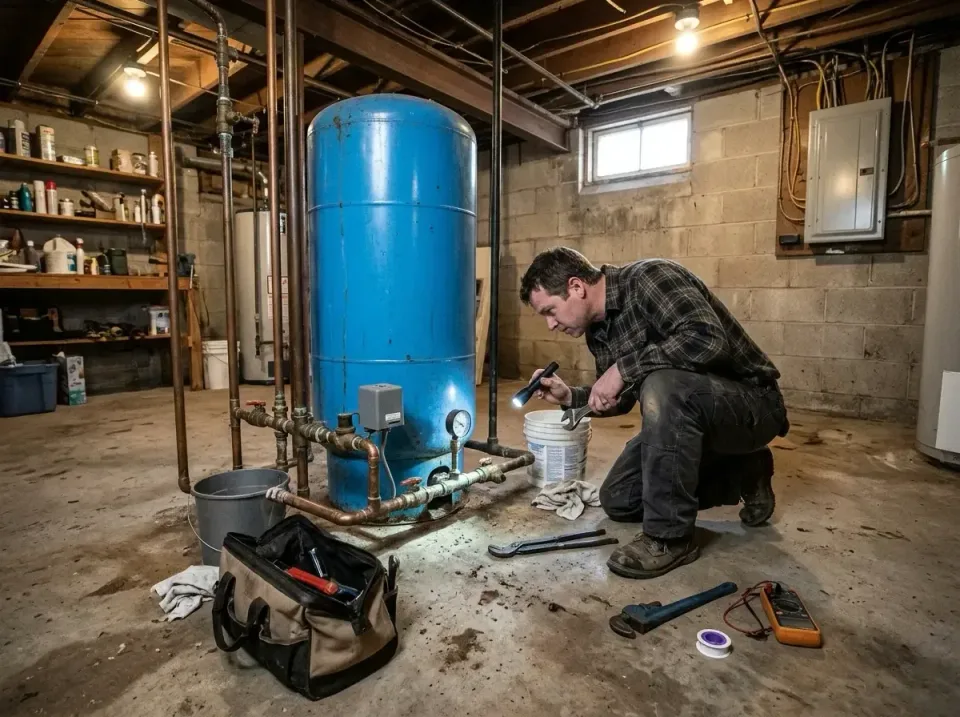
Identify the water source: If the property uses a well, point out the tank and pump locations so the plumber can inspect the right equipment.
Plan access: Tell occupants if testing may require a temporary water shutoff, and arrange access to the building’s water-service area.
Protect nearby surfaces: Move towels or belongings and clear cabinets around the affected fixture before the visit.
A 0–200 psi water pressure gauge can help document readings, but leave system adjustments to a plumber.
Yes, a restriction in an upstairs branch or fixture can leave downstairs taps apparently unaffected, so compare more than one faucet on the upper floor. If several upstairs fixtures are weak, ask a water pressure plumber to trace the shared piping rather than replacing a single tap.
Pressure diagnosis is typically $100–$300, with testing and access affecting the work involved. Ask whether the plumber will compare readings at multiple fixtures and explain what those tests indicate before recommending a repair.
You can clean a removable showerhead or aerator and check that an accessible fixture valve is open, but stop if a valve is stuck or more than one tap is affected. Call Illinois Plumbing Pros to investigate a persistent branch or supply problem before changing system controls.
Ask whether the planned work needs a permit and how the applicable requirements affect access or scheduling.
Pressure regulator repair can help when testing shows a faulty regulator is affecting the plumbing system, but it will not clear a clogged fixture or branch line. If several taps are affected, a regulator inspection is a reasonable part of Water Pressure Diagnosis before selecting a repair.
Weak upstairs taps may come from a fixture, a branch restriction, or a wider supply issue; the pattern across the home helps distinguish them. If the pressure changes suddenly, affects several rooms, or persists after a simple aerator cleaning, arrange a proper inspection rather than guessing.
Our Illinois-licensed plumbing professionals explain what they find and discuss repair options before agreed work begins. For a measured assessment, contact Illinois Plumbing Pros at (877) 773-0781 and ask about water pressure diagnosis.
Yes, a restriction in an upstairs branch or fixture can leave downstairs taps apparently unaffected, so compare more than one faucet on the upper floor. If several upstairs fixtures are weak, ask a water pressure plumber to trace the shared piping rather than replacing a single tap.
Pressure diagnosis is typically $100–$300, with testing and access affecting the work involved. Ask whether the plumber will compare readings at multiple fixtures and explain what those tests indicate before recommending a repair.
You can clean a removable showerhead or aerator and check that an accessible fixture valve is open, but stop if a valve is stuck or more than one tap is affected. Call Illinois Plumbing Pros to investigate a persistent branch or supply problem before changing system controls.
Ask whether the planned work needs a permit and how the applicable requirements affect access or scheduling.
Pressure regulator repair can help when testing shows a faulty regulator is affecting the plumbing system, but it will not clear a clogged fixture or branch line. If several taps are affected, a regulator inspection is a reasonable part of Water Pressure Diagnosis before selecting a repair.
Browse all nationwide service options and choose the right fit for your project.
Water Pressure Diagnosis checks residential pressure at fixtures and hose bibs; a typical visit runs $125–$275, depending on access and testing scope.
We install home booster pumps sized to demand; capacity and electrical work shape the typical $800–$2,500 range. Wind chill can freeze exposed piping, so Springfield and Decatur access matters.
We trace sudden whole-house pressure drops for Illinois homeowners, checking accessible supply lines and pressure controls; typical repair costs depend on the failed part and access, often $150–$1,200.
We locate and repair pressure-affecting water line leaks for homeowners, including accessible pipe and buried-line work; typical repairs run $250–$1,500, depending on location and excavation.
We repair residential pressure-reducing valves, including accessible valve and connection work; typical repairs run $200–$600, depending on parts and labor.
We clear residential water-line blockages and inspect accessible pipe sections; a typical visit may run $200–$800, depending on access and blockage severity.
We repair showerheads, valves, and pressure problems; typical repairs run $150–$600 depending on access and parts. Illinois seasons and lake-effect snow can affect service timing.
We repair residential water booster pumps, checking pump components and controls; typical repairs may run $150–$600, depending on parts and access.
Well Water Pressure Repair addresses weak flow and cycling pumps by checking well controls, tank settings, and piping. Cost depends on the fault, parts, and access.
We clear or replace restricted faucet aerators and worn fixture parts; typical repairs run $125–$350, depending on access and parts.
We repair or replace well pressure tanks, matching tank capacity and piping; replacement commonly runs $800–$2,000. Gateway Arch travelers at O’Hare should plan for freeze-thaw strain on buried lines.
We free or replace stuck household shutoff valves, including corroded basement fittings; typical work runs $150–$500 depending on access and valve condition. Midway-area homeowners should protect exposed plumbing from...
We restore hot-water flow at residential fixtures and heater connections; typical repairs run $150–$600, depending on access and parts.
Select a city to find local low water pressure repair providers we cover in Illinois.
Share your job scope for low water pressure repair in Illinois — we will review fit and pricing before scheduling.