Water Pressure Diagnosis
Water Pressure Diagnosis checks residential pressure at fixtures and hose bibs; a typical visit runs $125–$275, depending on access and testing scope.
A well pump that starts every few minutes can point to a pressure tank that is no longer cushioning the system. Illinois Plumbing Pros repairs well pressure tanks across Illinois, helping restore steady water service and reduce unnecessary pump cycling.
Browse all service options available across Illinois and choose the right fit for your project.
Water Pressure Diagnosis checks residential pressure at fixtures and hose bibs; a typical visit runs $125–$275, depending on access and testing scope.
We install home booster pumps sized to demand; capacity and electrical work shape the typical $800–$2,500 range. Wind chill can freeze exposed piping, so Springfield and Decatur access matters.
We trace sudden whole-house pressure drops for Illinois homeowners, checking accessible supply lines and pressure controls; typical repair costs depend on the failed part and access, often $150–$1,200.
We locate and repair pressure-affecting water line leaks for homeowners, including accessible pipe and buried-line work; typical repairs run $250–$1,500, depending on location and excavation.
We repair residential pressure-reducing valves, including accessible valve and connection work; typical repairs run $200–$600, depending on parts and labor.
We clear residential water-line blockages and inspect accessible pipe sections; a typical visit may run $200–$800, depending on access and blockage severity.
We repair showerheads, valves, and pressure problems; typical repairs run $150–$600 depending on access and parts. Illinois seasons and lake-effect snow can affect service timing.
We repair residential water booster pumps, checking pump components and controls; typical repairs may run $150–$600, depending on parts and access.
Well Water Pressure Repair addresses weak flow and cycling pumps by checking well controls, tank settings, and piping. Cost depends on the fault, parts, and access.
We clear or replace restricted faucet aerators and worn fixture parts; typical repairs run $125–$350, depending on access and parts.
We free or replace stuck household shutoff valves, including corroded basement fittings; typical work runs $150–$500 depending on access and valve condition. Midway-area homeowners should protect exposed plumbing from...
We restore hot-water flow at residential fixtures and heater connections; typical repairs run $150–$600, depending on access and parts.
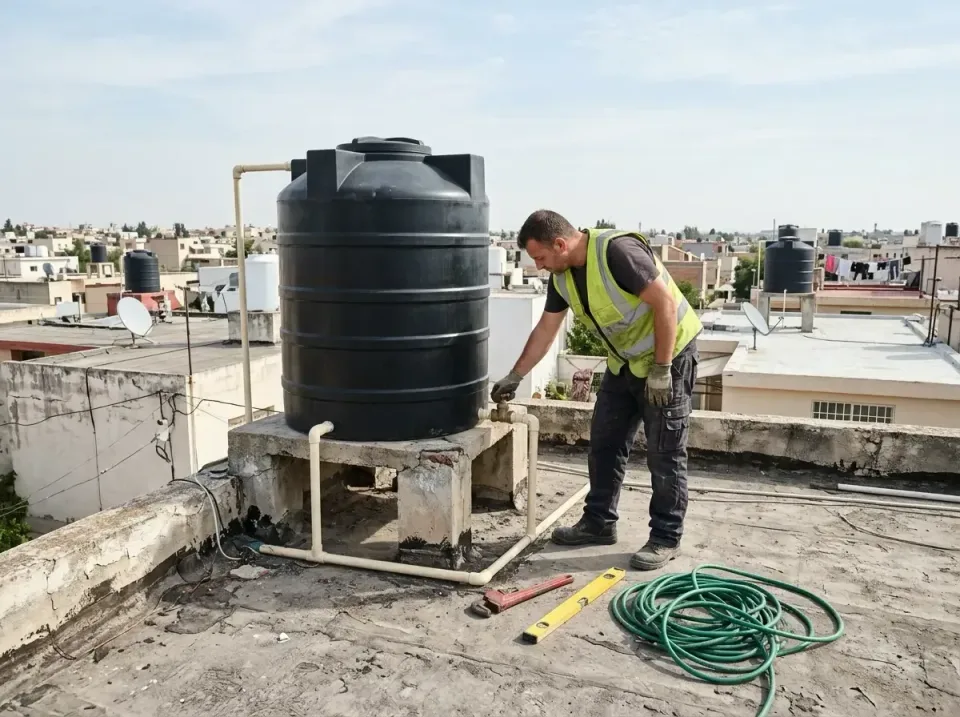
Well pressure tank repair starts with matching the tank’s behavior to the pump’s pressure-switch settings. We inspect the tank, switch, gauge, and connected piping, then compare readings with the system’s cut-in and cut-out points before recommending a repair.
Drought periods can strain private well supplies, so a tank problem may show up alongside reduced water availability; tank work cannot create water the well does not have.
We explain what the readings show and review repair options before work begins. Call (877) 773-0781 to discuss your tank and arrange a scope review.
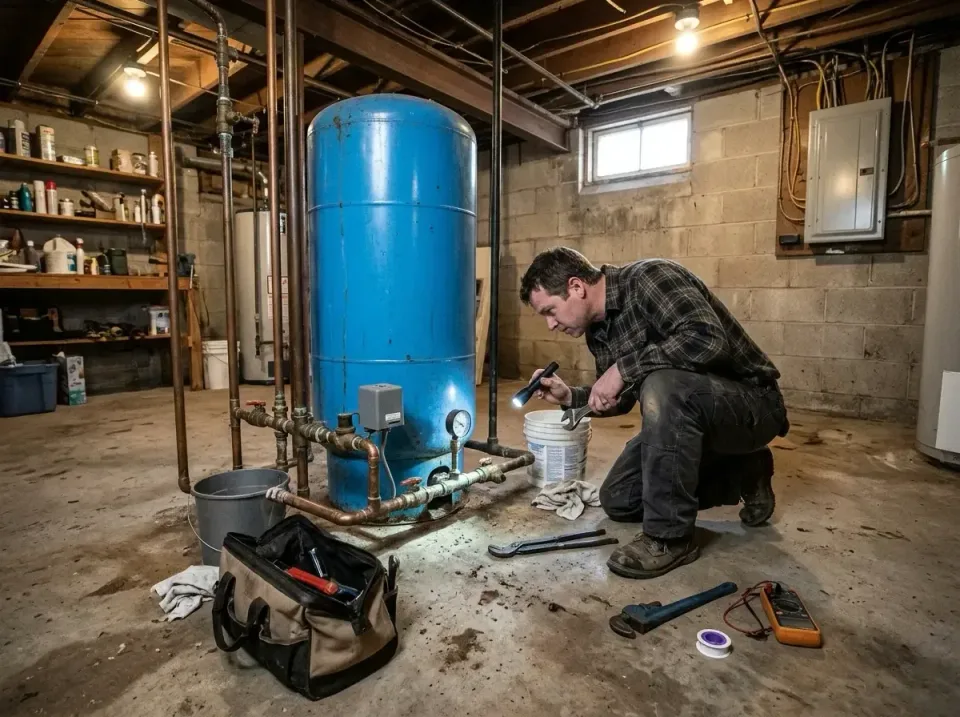
We begin by confirming the reported symptoms and locating the tank, pressure switch, and accessible shutoffs. Next, we inspect the connections and gauge, then measure pressure as the pump starts and stops; the recorded readings help us distinguish a tank issue from a control or piping problem.
The tank’s precharge is checked with the water side depressurized, and it is commonly set 2 psi below the switch’s cut-in pressure. We explain any needed isolation before adjusting or replacing components. Repairs can often be completed during the visit when the correct parts and access are available; a different tank size or piping changes the schedule.
Illinois has four distinct seasons, so we ask whether the problem changes with seasonal water use. Heavy rain may expose drainage or basement seepage problems around equipment, which we note before beginning work. Homeowners near Allerton Park and Retreat Center in Monticello can clear a path to the tank, while those near Cahokia Mounds State Historic Site in Collinsville should mention any access limits in advance.
A trained crew checks the pressure switch and tank together, then confirms that the replacement’s capacity and connections suit the existing system.
We also protect the work area and explain what must be isolated before opening the water system; electrical pump controls are not a safe DIY adjustment. Near Fort de Chartres State Historic Site in Prairie du Rocher, tell us if tank access is tight so we can plan equipment and handling before arriving.
The Illinois State Capitol in Springfield is a useful reminder that requirements can differ by jurisdiction; where applicable, we coordinate permit needs and follow the Illinois Plumbing Code, 77 Ill. Admin.
Code 890. We share findings in plain language and review the agreed scope before repairs.
Ask our Illinois-licensed plumbing professionals to assess the tank rather than guessing at a replacement.
A cycling pump may need a small component repair or a full tank replacement, and the difference comes down to testing, tank capacity, piping, and access. We identify the failure before proposing work; final quotes vary by scope, parts, access, and site conditions.
A diagnostic visit commonly runs $100–$300, with testing and equipment access affecting the work. Pressure-switch or related component repair may fall around $200–$600 depending on parts and labor.
A well pressure tank replacement commonly costs $800–$2,000; tank capacity, piping changes, and the space available to remove and position the tank drive the range. These are planning ranges, not a quote for your property.
Near Navy Pier, lake-effect snow can make travel and access more difficult, so note any conditions that could affect the visit. Peoria Riverfront Museum visitors may plan around riverfront events, but tank access at home is the practical scheduling detail to share. Contact Illinois Plumbing Pros at (877) 773-0781 for a final quote matched to the job scope.
Moisture near the tank can signal a leak or condensation that deserves attention. Check whether the area stays damp after nearby water use stops. Persistent wetness may damage surrounding surfaces, so note where it appears and have the tank and connections inspected.
Rust on the tank can indicate corrosion that may worsen over time. Look for discoloration, flaking, or rust marks around the tank and its fittings. Keep the area accessible and ask a plumbing professional to assess whether the tank or connected piping needs repair.
Corrosion at connections can be an early sign that fittings need attention. Check visible joints for crusty deposits, staining, or dampness, without loosening or adjusting them. Sharing what you notice helps a technician inspect the tank connections and explain suitable repair options.
Call Illinois Plumbing Pros at (877) 773-0781 to review your well pressure tank repair; near Decatur Civic Center, share access details, and tell us whether cold winters or hot, humid summers change your water use.
Yes, a tank repair can address frequent cycling when a failed bladder or incorrect precharge is causing the pattern, but the pressure switch also needs checking. Near Morton Arboretum in Lisle, note whether cycling happens only during water use or continues when taps are off.
Send a photo of the tank label and connections, plus the pump’s cycling pattern and any pressure readings you already have; do not open electrical controls to gather information. If you are near Six Flags Great America in Gurnee, include any access constraints that could affect equipment handling.
Permit requirements depend on the work and location; the Illinois Plumbing Code, 77 Ill. Admin. Code 890, governs applicable plumbing requirements.
Yes, pressure can still fluctuate if the switch, pump, or piping has a separate fault, so the system should be checked after the tank work. Around Starved Rock State Park in Utica, mention whether fluctuations occur during showers or when another fixture is running.
A scope review from Illinois Plumbing Pros can identify the tank size and access conditions before you decide.
Select a city to find local low water pressure repair providers we cover in Illinois.