Water Pressure Diagnosis in Rock Falls, IL
Water Pressure Diagnosis checks residential pressure at fixtures and hose bibs; a typical visit runs $125–$275, depending on access and testing scope.
Rock Falls High School is a familiar landmark, but a weak shower stream at home is a problem our crew can measure and trace. We provide low water pressure repair for Rock Falls properties, from older brick and frame homes to ranch houses with basements.
Hot, humid summers can raise household water use, so a pressure drop that appears when several fixtures run deserves a check of both pressure and flow. Summer thunderstorms can also disrupt municipal water service; if pressure changes suddenly after a storm, note whether neighbors have the same issue before assuming the fault is inside your home.
We test before recommending work. Our team checks fixtures, accessible shutoffs, and the pressure-regulating equipment, then explains what the readings mean and what repair options fit the problem. Heritage Village Museum gives us another local reference point as we schedule calls across Rock Falls; we confirm access to the meter and utility area before arriving.
We will help you describe the symptoms and arrange the next step.
Water Pressure Diagnosis checks residential pressure at fixtures and hose bibs; a typical visit runs $125–$275, depending on access and testing scope.
We install home booster pumps sized to demand; capacity and electrical work shape the typical $800–$2,500 range. Wind chill can freeze exposed piping, so Springfield and Decatur access matters.
We trace sudden whole-house pressure drops for Rock Falls, IL homeowners, checking accessible supply lines and pressure controls; typical repair costs depend on the failed part and access, often $150–$1,200.
We locate and repair pressure-affecting water line leaks for homeowners, including accessible pipe and buried-line work; typical repairs run $250–$1,500, depending on location and excavation.
We repair residential pressure-reducing valves, including accessible valve and connection work; typical repairs run $200–$600, depending on parts and labor.
We clear residential water-line blockages and inspect accessible pipe sections; a typical visit may run $200–$800, depending on access and blockage severity.
We repair showerheads, valves, and pressure problems; typical repairs run $150–$600 depending on access and parts. Rock Falls, IL seasons and lake-effect snow can affect service timing.
We repair residential water booster pumps, checking pump components and controls; typical repairs may run $150–$600, depending on parts and access.
Well Water Pressure Repair addresses weak flow and cycling pumps by checking well controls, tank settings, and piping. Cost depends on the fault, parts, and access.
We clear or replace restricted faucet aerators and worn fixture parts; typical repairs run $125–$350, depending on access and parts.
We repair or replace well pressure tanks, matching tank capacity and piping; replacement commonly runs $800–$2,000. Gateway Arch travelers at O’Hare should plan for freeze-thaw strain on buried lines.
We free or replace stuck household shutoff valves, including corroded basement fittings; typical work runs $150–$500 depending on access and valve condition. Midway-area homeowners should protect exposed plumbing from...
We restore hot-water flow at residential fixtures and heater connections; typical repairs run $150–$600, depending on access and parts.
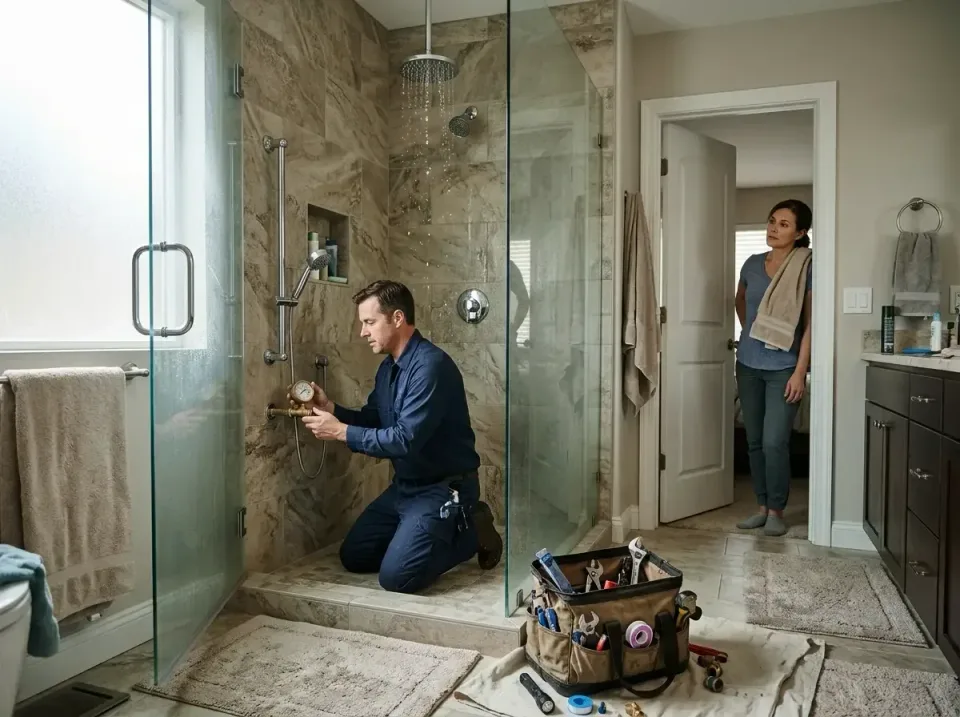
Rock Falls’ four distinct seasons put different demands on water lines: freeze-thaw cycles can stress buried pipes, while heavy rain may reveal drainage or basement seepage concerns near a service line. At Rock Falls City Hall, we keep the local setting in mind, but diagnose each property from its own test results.
Snow and ice can delay access to outdoor plumbing, so we coordinate the visit and discuss clear access to the relevant areas in advance. We respect the home and work area throughout the job. Call (877) 773-0781 to schedule a pressure check.
A shower stream that weakens throughout a Rock Falls home can point to a main-line restriction or pressure-control problem; our crew compares readings at multiple fixtures before recommending a repair. Seasonal temperature swings can make piping expand and contract, so tell us whether the change began after a cold snap. You can safely compare two taps at the same time and note whether both slow.
If faucets falter when appliances run, we check flow and accessible valves in the home, including in ranch houses with basements. Drought can strain private well supplies, so a well owner should note whether the pump runs unusually often; we inspect the tank and switch rather than guessing.
Rock Falls calls we cover are in ZIP code 61071. A quick note about when the pressure changes helps our team plan the diagnosis.
River fog and dampness around Rock Falls can leave basement areas clammy, but dampness alone does not prove a water leak. Near the Hennepin Canal Parkway, our crew checks the pressure readings and visible piping before tracing a suspected leak; a safe homeowner check is to look for new damp spots without opening walls or touching electrical equipment.
Spring rainfall can saturate soil around buried service lines, making a pressure drop worth investigating when it appears alongside wet ground. We use the site conditions and water-pressure results to decide whether further leak detection is needed.
For well-served properties, a worn pressure tank can also contribute to weak flow; we check its operation rather than replacing it by assumption. If a pressure-reducing valve is restricting flow, we assess its condition and function before repair. Call when the pressure loss persists or unexplained moisture appears.
Pressure-related plumbing work in Rock Falls must follow applicable Illinois requirements, including the Illinois Plumbing License Law, 225 ILCS 320. Rock Falls City Hall is a local point of reference, but customers should confirm whether a specific project needs local approval or inspection before work starts.
That distinction matters. Skipping a required permit or inspection can leave work unverified and create trouble during later repairs or property transactions. Our insured plumbing contractor explains the applicable requirements, coordinates access, and completes agreed work to the relevant standards. Ask us about the approval steps for your property before scheduling.
Get a clear diagnosis and a repair plan suited to your home.
Technicians check pressure at fixtures and key points in the system, then explain what they find. You can discuss the repair plan before work begins, with the scope agreed on together.
The team works across Illinois and understands how older plumbing, basement shutoff valves, and local conditions can affect a diagnosis. That background helps guide checks without assuming every low-pressure problem has the same cause.
The team coordinates job-site access and local permit requirements when the work calls for them. Technicians protect nearby floors and cabinets during plumbing access and confirm pressure stability before closing the work area.
Each visit moves from your reported symptoms to confirmed system pressure and an agreed repair.
Share Symptoms
Tell the team which fixtures are affected and when pressure changes. They confirm the symptoms and affected fixtures so the visit can focus on the areas you have noticed.
Check Access
The technician locates and identifies the main water shutoff, then protects floors or cabinets near the plumbing access point. You know where the work will take place.
Test Pressure
The technician checks pressure at fixtures and key points in the system, measuring before any adjustments. You receive an explanation of the findings and the repair options.
Confirm Repair
After you confirm the repair plan, the technician completes the agreed work and measures pressure again. They confirm pressure stability before closing the work area.
A toilet tank taking longer to refill can be an early sign of a supply issue. Notice whether the change affects one bathroom or several, and share that detail when arranging an assessment.
A utility sink that fills more slowly than usual may signal a change worth tracking. Compare it with nearby fixtures and note whether the change is steady or occasional, without assuming the cause.
A washing machine or dishwasher taking longer to fill can be a clue to monitor. Check whether nearby faucets seem unchanged; that distinction can help a technician understand how widely the issue shows up.
River fog and damp conditions can make access around exterior plumbing less comfortable. A pressure assessment can help you understand what is happening indoors, while the team coordinates access and protects nearby surfaces during the work.
Damp air near the river can linger around plumbing access points, so clear protection for floors and cabinets matters during a visit. Schedule diagnosis when pressure concerns arise and get findings based on checks throughout the system.
Foggy, damp conditions can affect the work area around plumbing access. A visit provides an opportunity to check pressure at fixtures and key system points, discuss the findings, and confirm the repair plan before work proceeds.
River dampness and fog can persist even when outdoor conditions change, making careful access planning useful. A technician can assess indoor pressure, explain the findings, and confirm pressure stability after agreed repair work.
Hot Taps Only
Before: Hot taps have weaker flow than cold taps, leaving the cause unclear. The difference is most noticeable at the affected fixtures, and it is not yet known whether the issue is limited to one point or connected to the wider system.
After: The technician checks pressure at affected fixtures and key points in the system, explains the findings, and reviews a repair plan with you. After agreed work, pressure is measured again and stability is confirmed before the work area is closed.
Permit requirements depend on the work being done. Ask whether the provider checks applicable local requirements and coordinates them when needed, so the scope and job-site arrangements are clear before repairs begin.
Ask how the proposed work, any required permits, and the agreed scope are documented before repairs proceed. Clear terms help you understand what has been approved and what work is outside that plan.
Request a quote online or contact our Rock Falls, IL team directly by phone or email.
A common residential target is 40–60 psi, though actual readings depend on the property and plumbing. Our crew measures pressure at multiple fixtures and explains the results; you can note which taps feel weakest before the visit.
When faucets slow as an appliance fills, the cause may involve available flow, a restriction, or a pressure-control issue. In a Rock Falls ranch with a basement, check whether the problem affects several fixtures, then share that pattern with our team.
Yes. A regulator that is failing or incorrectly set can restrict household flow. We test pressure on the system and inspect the regulator before recommending an adjustment or repair.
The final quote varies with the scope, parts, access, and site conditions. Diagnosis, regulator work, and a buried-line repair require different labor and materials, so we explain the recommended work before proceeding.
Low Water Pressure Repair is also available in these nearby communities across Illinois.